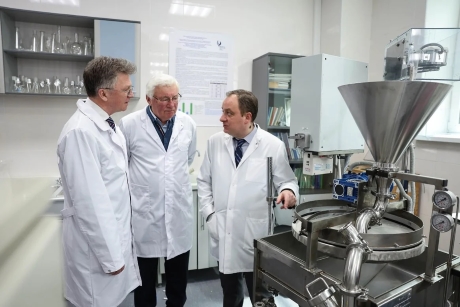
Researchers from the Belarusian State University in Minsk and the North Caucasus Federal University in Stavropol have developed a new method for extracting biologically active substances from medicinal plants using whey, NCFU’s press service reported.
Russian Federation Patent No. 2851443 protects the technology for extracting flavonoids and other polyphenols from plant materials, including purple coneflower, peppermint, milk thistle, and jujube fruit extract, using aqueous solutions of whey proteins. The results position the method as an industrially applicable tool for the food and pharmaceutical industries, including production of functional dairy products, non-alcoholic and fermented beverages.
The essence of the invention lies in using whey as an environmentally friendly extractant capable of increasing the yield of biologically active substances while simultaneously enriching extracts with protein components. In experiments published in the journals News of Biomedical Sciences and Technique and Technology of Food Production, the authors demonstrated optimal conditions: three-hour extraction at approximately 90 ± 1 degrees Celsius with a ratio of 7.5 to 12.5 grams of herb per 450 milliliters of whey. Under these conditions, flavonoid yield increases by 15 to 25 percent compared to traditional water-alcohol extraction methods, and the antioxidant activity of extracts nearly doubles.
The technology addresses two challenges simultaneously: reducing reliance on conventional solvents and incorporating whey into high-value-added chains. Whey proteins, including lactoglobulin and lactalbumin, function as a universal pump, binding and extracting compounds that separate poorly with classical extractants, forming stable protein-phenolic complexes. This preserves the biological activity of thermolabile and high-molecular-weight compounds traditionally lost during prolonged thermal processing.
For the dairy industry, the method opens new opportunities for creating functional products. At NCFU, researchers tested applications of echinacea and mint extracts in goat milk yogurt production: adding extracts at 2 to 5 percent by volume noticeably improves taste, freshens product profile, and enhances oxidation resistance without synthetic antioxidants. At Belarusian State University, they demonstrated that the extracts retain the immune-stimulating potential described for echinacea preparations. According to clinical meta-analyses, such preparations can reduce ARVI and influenza symptoms by approximately 50 to 55 percent in patients.

Comments (0)
Twitter
Facebook
Pinterest
E-mail